Templates[temp]
Function Type Explained: Signatures Without the Body

- Section
- Templates [temp]
- Published
- Length
- 4 min read
In this answer2 clauses
- 1Common Function Types Used in JavaScript
- 1.1The basics of how functions work
- 1.2Giving a function a name
- 1.3Passing a function along as a callback
- 1.4Writing a function with no name
- 2Swift’s Way of Typing Functions
- 2.1Why functions carry their own type
- 2.2How function types are written out
- 2.3What are some examples of a function?
Abstract
A function type describes a callable by its parameter types and return type, without specifying its implementation. In C++, it is written as R(Args...), and pointers, references, and std::function are distinct ways to refer to or store callables with that signature; since C++17, noexcept can also be part of the type. Read the signature, check which language standard your build supports, and choose the simplest suitable form.

Think of a power outlet. Its shape tells you which plugs fit, not what the appliance does once it’s running. A function type works the same way: it records the parameter types and the return type, and leaves out the body.
In C++, int(double) is exactly that: a signature with no implementation attached.
Answers you find online often disagree because they were written for different standards.
In this post, we’ll cover how to write function types, how they’re deduced, and when a pointer, a reference, or std::function fits best, with each answer tied to the standard it needs.
Common Function Types Used in JavaScript
Before we get to C++, here are the JavaScript forms you’ll meet first.
The basics of how functions work
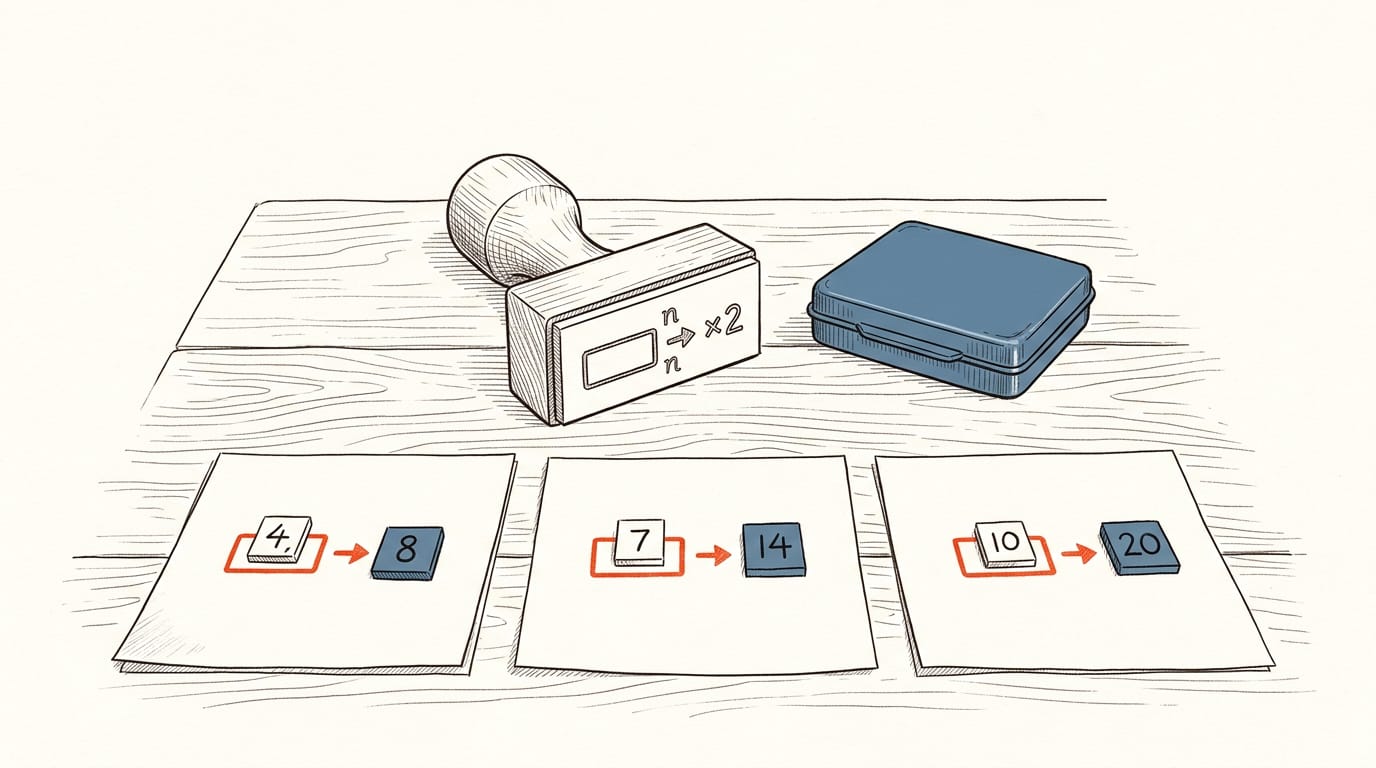
A function is a block of code you write once and call whenever you need it. Reusable code saves time, since you write the logic once. A parameter is the placeholder in the definition, and an argument is the value you pass when you call it.
function doubleNumber(n) {
  return n * 2;
}

console.log(doubleNumber(4)); // 8
— end example]
Here n is the parameter and 4 is the argument. Defining a function doesn’t run it. Nothing runs until you call it.
Picture a C++ developer who needs this doubling rule in three places. When the rule changes, they edit one function instead of three copies.
Giving a function a name
A named function uses the function keyword followed by a name, which gives you three things:
- Keyword plus name.
function greet(name)declares a function you can call later. - Reusable later. Call it from anywhere it’s in scope, as often as you need.
- Passable as arguments. Its name lets you hand it to another function, as the next section shows.
Passing a function along as a callback
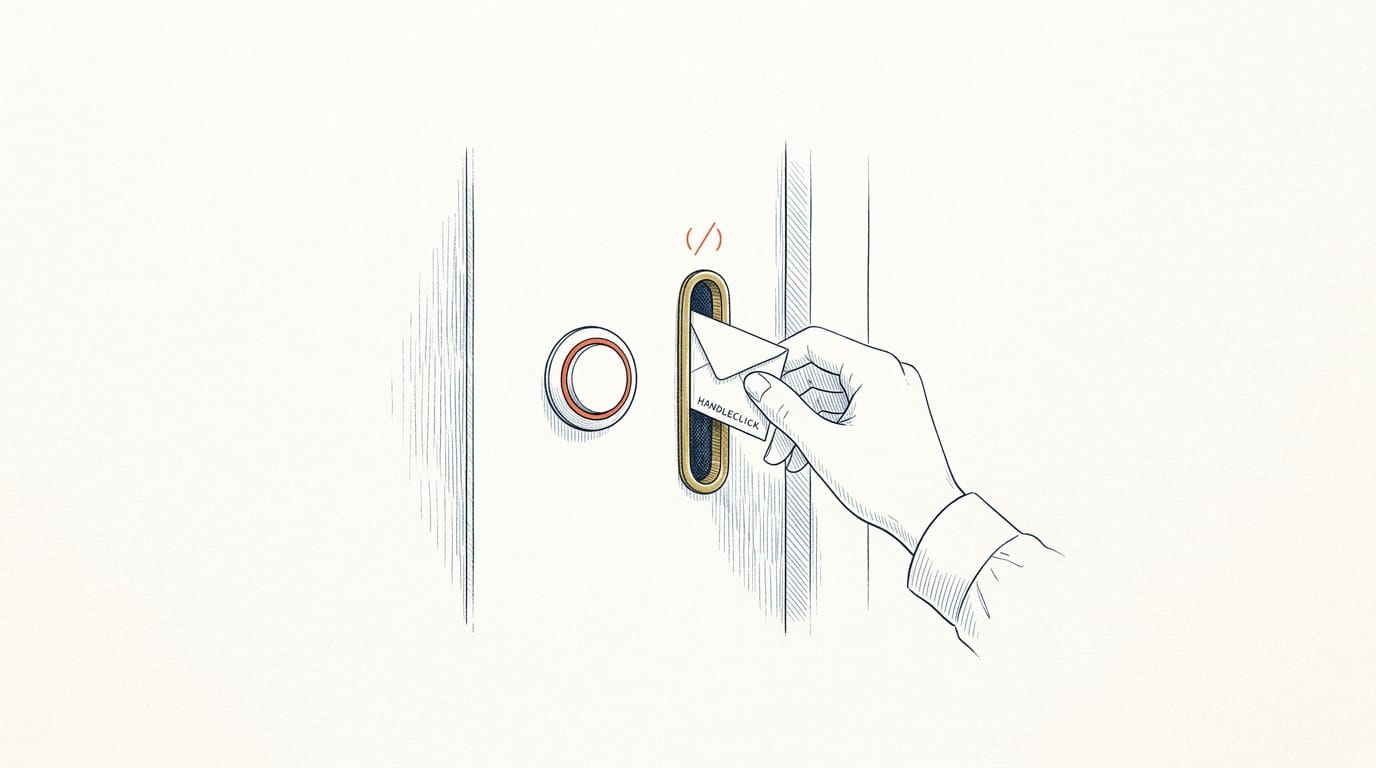
A callback is a function you pass as an argument, to be called later. Event handling is the classic case:
function handleClick() {
  console.log("Button clicked");
}

button.addEventListener("click", handleClick);
— end example]
Notice that you pass handleClick, not handleClick(). The parentheses would call the function right away and pass its result instead. For a C++ developer adding their first button handler, a named function is easy to scan in a pull request.
Writing a function with no name
You can also declare a function without a name. An arrow function is the short syntax for that, written with =>:
button.addEventListener("click", () => {
  console.log("Button clicked");
});
— end example]
Written inline as a callback, it can’t be referenced anywhere else, so it suits a short, one-off handler. C++ calls its version a lambda, and lambda closure types are unique: each lambda gets a type of its own.
Swift’s Way of Typing Functions
Swift writes a function type in a form that mirrors its signature.
Why functions carry their own type
Swift treats functions as first-class values, so you can store one in a variable or pass it around. Every function has its own type. Closure parameters use these same types, so you need the type to read them.
In C++, with int add(int a, int b), decltype(add) gives the type int(int, int), while auto op = add; (both C++11) deduces a pointer.

How function types are written out
Swift uses (parameter types) -> return type. Each parameter’s type is whatever sits in the parentheses, so (Int, Int) -> Int takes two Ints and returns one. A function that takes and returns nothing is () -> () or () -> Void, where Void means no return.
C++ puts the return type first with R(Args...), so int(int, int) returns an int. Same idea, different order. Since C++17, noexcept is part of the type too: void() noexcept differs from void().
What are some examples of a function?
- Inferred type: with Swift’s
add(a:b:),let op = addgivesopthe type(Int, Int) -> Int. - Explicit annotation:
let op: (Int, Int) -> Int = addspells the type out. - No labels on the call: argument labels aren’t part of the type, so
op(2, 3)works. - Function returning a function:
func makeAdder(_ n: Int) -> (Int) -> Intreturns(Int) -> Int. - typealias:
typealias BinOp = (Int, Int) -> Intnames the type once. C++ does the same withusing BinOp = int(int, int);(C++11).
In C++, a plain function, a pointer like int(*)(int, int), and std:: (C++11) are three different things. A pointer stores one function’s address, while std::function holds any callable with that signature.
A game engine programmer storing an update hook as std:: gets a compile error when a teammate’s handler has the wrong signature, not a bug mid-frame.
A function type is the shape of a callable: its parameters and its return type. Once you can read that shape, you’ll see a pointer, a reference, and std::function as three ways to hold a callable of that type.
Each one refers to or stores something with that shape, and some need a newer standard than others.
Know the shape. Check the standard your build targets. Then pick the simplest tool that fits the job.
Questions
What is function and write its types?
A function is a reusable block of code that runs when called. Common forms include named functions, anonymous functions such as arrow functions or lambdas, and callbacks, which are functions passed to other functions; a function type describes its parameter and return types.
What is the type of parameter in the function?
A function parameter has the type specified in its declaration, such as `int` in `int doubleNumber(int n)`. The parameter is a placeholder, while the argument is the value supplied when the function is called.
What are the functions of OOP?
In object-oriented programming, functions defined inside a class are usually called methods. They perform operations on objects, work with their data, and may be instance methods, class or static methods, or constructors and destructors.
How to use type() in Python?
In Python, `type(value)` returns the value's type, such as `type(5)` returning `<class 'int'>`. You can also use `type` to create a class dynamically, though class definitions are more common for that purpose.
What are some examples of a function?
Examples include a function that doubles a number, a function that greets a user, and a callback that handles a button click. For example, `def double(n): return n * 2` defines a function that returns twice its argument.
Is OOP still relevant?
Yes. OOP remains widely used for organizing programs around objects that combine data and behavior, especially in large applications and systems with interacting components. Its usefulness depends on the problem, and simpler procedural or functional approaches can be a better fit for some tasks.